
Healing Chronic Cystic Acne Naturally: A Client Story of Stress, Gut Health, and Skin Recovery
When Acne Starts Early
When Alexi talks about her skin, she doesn’t sugarcoat it.
Her story with chronic cystic acne started when she was a teenager.
“I feel like I first got acne when it was typical for hormonal teenagers to get it. Mine always was more cystic.”
While her peers had whiteheads and small breakouts, she was dealing with deep, painful cysts.
“I remember this one massive cyst I got on my forehead. I was calling it the unicorn horn.”
From there, the cycle began:
• Doxycycline
• Tetracycline
• Minocycline
Each time the antibiotics stopped, the acne came back.
Then came Accutane — in middle school.
“I had the worst experience ever. My lips were so dry. I was super depressed. I literally had a suicide attempt on it.”
When people now comment, “Why don’t you just take Accutane?” her answer is simple:
“It won’t, because it didn’t. And the side effects aren’t worth it for me.”
Her acne after Accutane still returned.
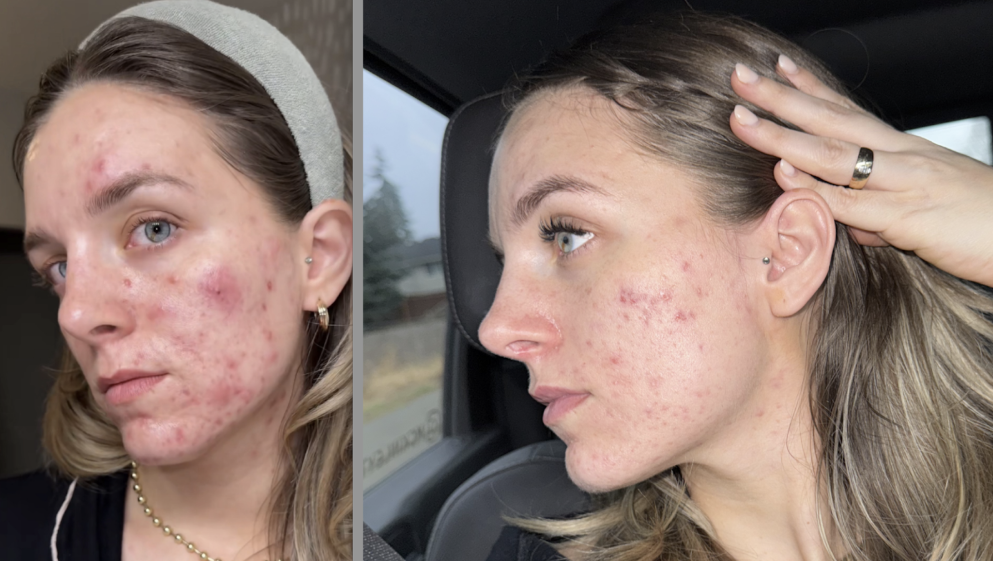
Alexi during years of chronic cystic acne.
“There Has to Be Something Deeper”
Now 29, Alexi had tried everything:
• Antibiotics
• Accutane
• Spironolactone after having her son
• Hormone testing
But something didn’t sit right.
“I am definitely one of those people that does not want to be on a pharmaceutical product for the rest of my life… I want to go deeper and figure out what exactly is going on inside my body.”
That question led her to a root-cause approach.
And that’s when everything shifted.
Discovering the Gut Skin Connection
Through deeper testing — including a GI Map, hair tissue mineral analysis, iodine testing, and comprehensive bloodwork — Alexi began to see the full picture.
“When I got my GI map back, we had a parasite, we had an infection, and then we also had H. pylori. There was just so much going on.”
She learned how those gut infections were affecting:
• Liver detox pathways
• Iron absorption
• Nutrient absorption
• Inflammation levels
“Your nutrients when you're eating, they're not being absorbed because of all of these things going on in your gut. It's like an internal suppressant. So nothing else is working properly because of what is going on in your body.”
For the first time, gut health and acne weren’t just buzzwords.
They were personal.
“Acne is just a symptom to an internal issue.”
Understanding the gut skin connection reframed everything.
It wasn’t just about clearing skin.
It was about restoring function.
The Stress and Acne Realization
One of Alexi’s biggest wake-up calls wasn’t just her gut.
It was stress.
Through hair tissue mineral analysis, she saw how stress was affecting her body on a cellular level.
“A lot of the way transparently that I had dealt with stress in the past was drinking and smoking pot.”
When she removed those habits, she realized something hard:
“I’m really not managing my stress.”
She grew up in a household of yelling. She was never taught how to self-regulate or self-soothe.
And that unprocessed stress was affecting her body.
“My body is literally telling me through my hair that stress is affecting the way that your body absorbs the nutrients… everything.”
For Alexi, the connection between stress and acne became undeniable.
When she started working on:
• Therapy
• Journaling
• Walking outside
• Breathing before reacting
Her anxiety changed too.
“I used to wake up with anxiety four out of seven days a week. I can’t tell you the last time I’ve had a full few days of anxiety.”
Healing her skin meant healing her nervous system.
The High — and the Humbling Low
In the first six months of working on her gut health, stress resilience, minerals, skincare, and lifestyle, her skin responded fast.
“It looked amazing within like six months.”
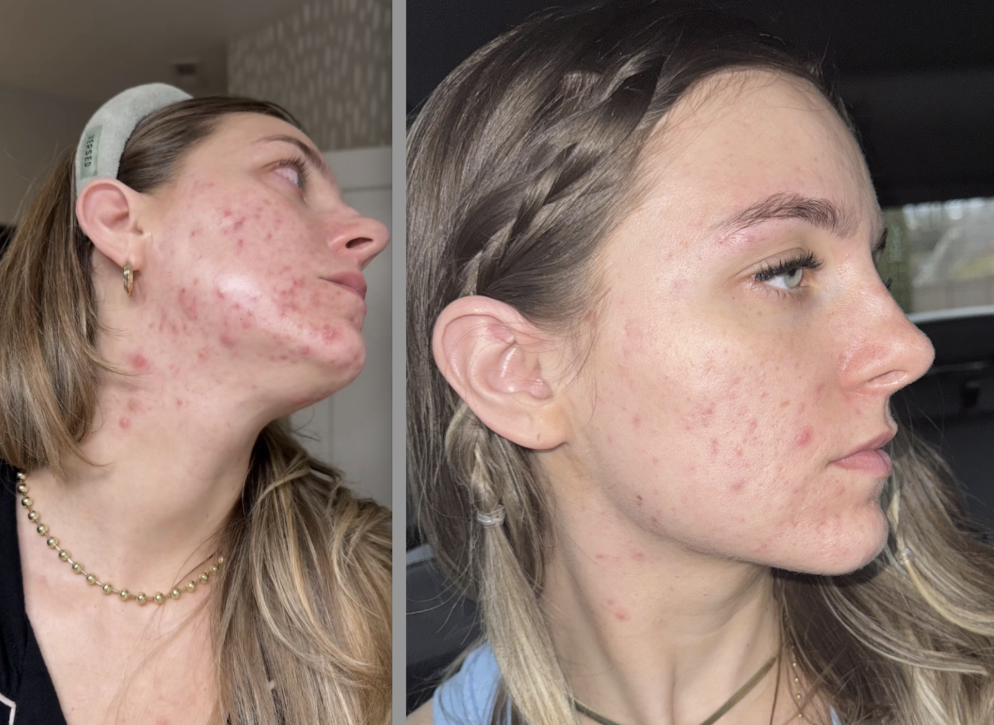
Alexi’s skin after addressing gut health, stress, and mineral balance.
People stopped her in person. Comments flooded in about how incredible her skin looked.
Then something very human happened.
“I loosened the reins.”
She stopped taking supplements consistently.
She gave her dad her cod liver oil.
She slipped back into old food habits.
Three months later — her skin flared.
“And when I tell you how hard it is to go from your skin looking amazing… to I’m having a big fat breakout again.”
It wasn’t just physical.
She felt like she had failed.
She felt like she was letting her team down.
She felt the weight of social media opinions.
“People started saying, oh well, the people you're working with, this is obviously a scam if you're breaking out again.”
But here’s what she realized:
“This is a long haul. This is a lifestyle change.”
Healing chronic cystic acne wasn’t a six-month fix.
It was undoing over a decade of internal imbalance.
What She Knows Now
Alexi doesn’t see acne the same way anymore.
“It’s just skin. It’s mild. It’s going to go away regardless.”
More importantly:
“Your worth is not found in the condition of your skin.”
She wants anyone struggling with chronic cystic acne to hear this:
“You’re not alone. Acne is only temporary. It will go away. It’s not anything that defines you.”
And she’s still doing the work.
She continues working with the team to build her skin resiliency and address her root causes even deeper — supporting her:
• Gut health
• Stress management
• Mineral balance
• Foundational lifestyle habits
Because for her, this was never about a quick fix.
It was about long-term healing.
“You have to be mentally prepared to change your life… what got you here won’t get you there.”
Healing the gut, regulating stress, prioritizing sleep, and staying consistent with what supports her body isn’t temporary.
It’s a lifestyle shift she’s still committed to.
And in her words:
“You will not regret it. There are so many things outside of acne that I’ve noticed a change in in my life — even down to a creaky knee.”
Her anxiety improved.
Her stress resilience improved.
Her awareness improved.
And her skin?
It’s no longer the enemy.
It’s feedback.