
Root Cause Acne: How Marissa Finally Understood What Was Behind Her Breakouts
There is a special kind of frustration that comes from doing everything right and still waking up with painful acne. You eat well, exercise regularly, switch to all expensive skincare, cut out certain food groups, and stop drinking coffee. You try prescription topicals, and maybe you take antibiotics or Accutane. Even with all of these changes you look in the mirror and think:
“Okay… but WHY is this still happening?”
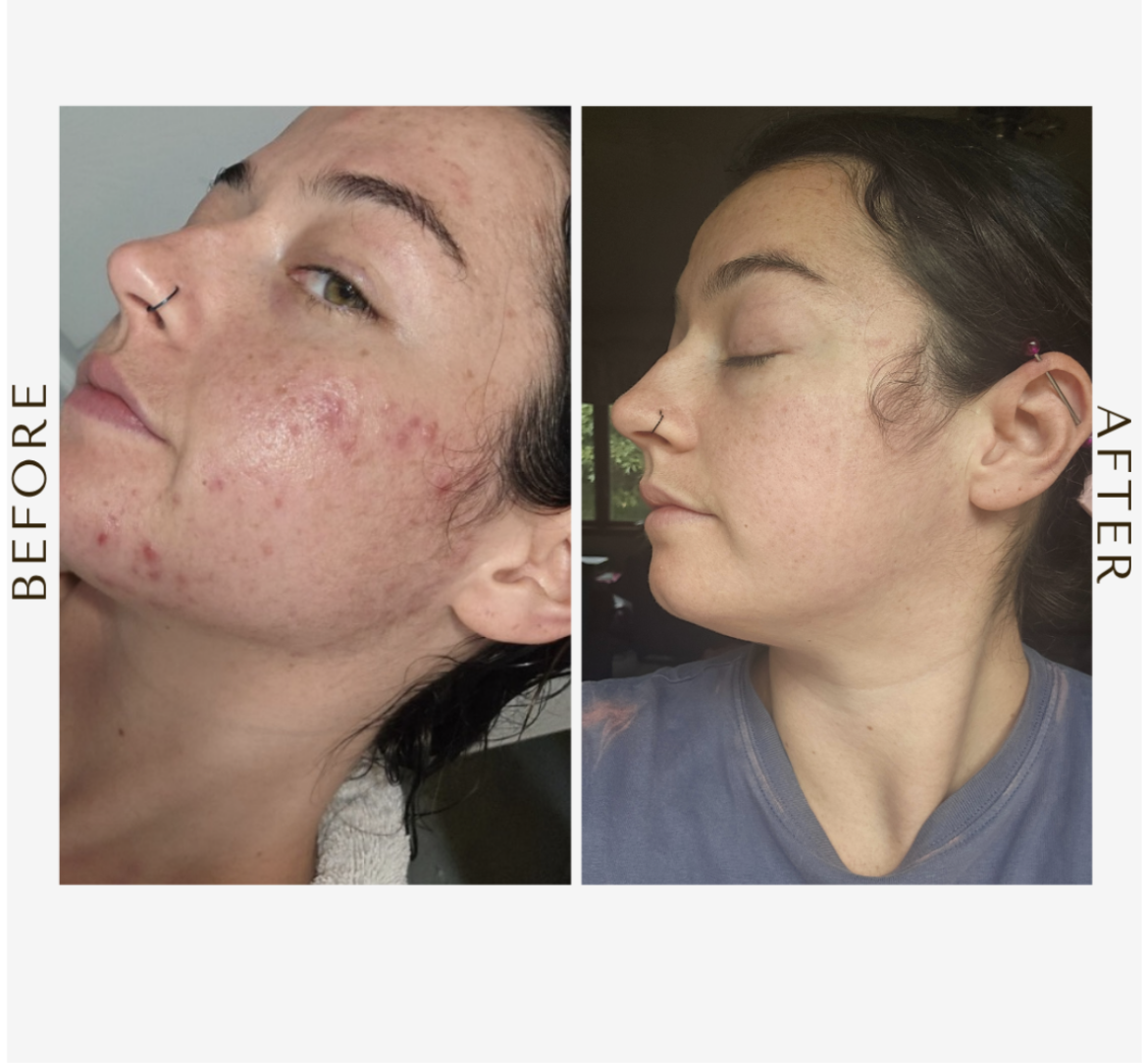
That question is exactly what brought Marissa to Clear Skin Lab. After previously experiencing clear skin following Accutane years earlier, Marissa suddenly found herself dealing with severe, painful acne again. She tried conventional treatments and lifestyle changes, but what frustrated her the most wasn't simply having acne. It was not understanding why it had returned.
Her story is a powerful example of what a healthy skin journey can look like when we stop viewing acne as something that exists completely separate from the rest of the body. And importantly, "root cause acne" does not mean there is always one hidden cause waiting to be discovered.
Acne is a complex inflammatory condition involving hormones, sebum production, follicular changes, immune signaling, genetics, the skin barrier, environmental factors, and lifestyle factors such as diet and stress. The goal isn't to find one magical explanation, but it's to understand your particular pattern and how to support that for the long term.
“I Tried Everything. I Just Needed to Know Why.”
Before working with our team, Marissa described feeling defeated. She had tried antibiotics, topical medications, different skincare products, dietary changes, and a long list of natural approaches. She had also previously used Accutane, which had worked well for her at the time.
Even with all of these approaches, her acne returned. What made the situation especially frustrating was that there wasn't an obvious event she could point to. She hadn't suddenly changed jobs. She hadn't moved. There wasn't one dramatic lifestyle change she could blame.
Her skin simply started behaving differently. And that is one of the most important things to understand about acne: sometimes there isn't one obvious trigger. Adult acne is multifactorial. Hormones, genetics, inflammation, diet, environmental factors, stress, and skin-care practices can all interact. In adult women specifically, hormonal signaling is an important part of acne biology, but it isn't necessarily the whole story.
When we work with clients that struggle with acne, we’re also trying to shift that mindset from looking for the one main cause of acne to thinking about what internal and external factors could be contributing to acne. When clients begin to view acne as a symptom to something deeper, they open the door for true healing.
The Root Cause Acne Approach Starts With the Whole Picture
When Marissa began working with our team, we weren't starting from zero. She already cared about her health - she’s a nurse who understood what her body needed foundationally. She was seeking help to figure out where to look next. That included nutrition adjustments, lab work, daily habits, stress, gut health, and her skincare routine.
After years of trying different approaches to clearing acne, your skincare routine can become a little enthusiastic. More exfoliation, more activities, and more products. Because if acne is bad, shouldn't we attack it harder?
Your Skin Barrier Matters
One of Marissa's biggest realizations was that her aggressive skincare routine may have been doing more harm than help. She came in using several acne-focused products looking for relief. Instead, her skin was becoming dry, irritated, and uncomfortable. Her routine was simplified by our team aesthetician to just cleansing and moisturizing while her skin barrier was given time to recover.
That wasn't about abandoning evidence-based acne care. It was about making sure her skincare wasn't creating unnecessary irritation while her acne was being addressed. Research supports the importance of skin-barrier-friendly skincare in acne management. Acne itself can be associated with barrier dysfunction, while some acne treatments can contribute to dryness and irritation. Gentle cleansing and appropriate moisturizing can help reduce irritation and support treatment adherence.
In other words: Your skin does not need to feel like it has been sanded down to see improvement. Sometimes, less really is more.
Gut Health and Acne: An Area Of Interest
One of the biggest parts of Marissa's experience involved her gastrointestinal health. Testing identified findings involving H. pylori, parasites, and other aspects of her gut environment that became part of her individualized care plan. Interestingly, she hadn't walked into the program thinking she had a major gut problem.
She didn't have a recent change in digestive symptoms. No dramatic bloating or long history of GI problems. This was a big surprise to her. There is growing scientific interest in the gut-skin and gut-brain-skin connection, including how gut microbes, immune signaling, diet, and intestinal function may interact with inflammatory skin conditions. Research has identified associations between the gastrointestinal microbiome and acne, and at the Clear Skin Lab we individualize how to support the gut environment for each client.
That does not mean everyone with acne has poor gut health. It also does not mean that finding H. pylori or another gastrointestinal organism automatically proves it caused someone's acne. For Marissa, these findings were one piece of a much larger picture. Addressing them alongside nutrition, stress, skincare, and other individualized factors coincided with improvements in her skin.
And that's the bigger lesson: One explanation for acne is oftentimes not the case.
Stress and Acne: Your Skin Knows When You're Running on Empty
Then there was the other big one: Stress. Marissa works as a nurse, has a child, and is also attending school full-time. Her schedule is busy, to put it mildly. She describes herself as a "go, go, go" person. Sound familiar?
One of the most important parts of her healthy skin journey was realizing that stress wasn't just something happening in her head. Her skin seemed to respond to it, too. She noticed that after several demanding shifts—especially when sleep suffered—her skin could flare.
Research has found an association between psychological stress and acne severity. One prospective study found that acne severity increased alongside examination-related stress, even after accounting for several other factors. Reviews have also described biological pathways through which stress signaling may influence inflammatory processes involved in acne.
That doesn't mean stress causes every breakout. And it certainly doesn't mean you need to transform every stressful part of your life to see clear skin. The point is to recognize your individual patterns and give your body adequate support where you realistically can. For Marissa, that meant learning that taking ten or fifteen minutes to decompress wasn't selfish. It was part of taking care of herself.
Sometimes that meant skipping a workout because she genuinely needed rest. Other times it meant prioritizing sleep. In some cases journaling, reading, or simply stepping away from the endless to-do list can have a positive impact on the body’s stress response.
Her biggest realization? She couldn't remove all of the stress from her life—but she could change how she supported herself through it.
Nutrition Isn't About Eating “Perfectly”
Marissa already had a strong nutritional foundation, as many of our clients do. Although the internet has countless lists telling women that they can never eat dairy, sugar, gluten, chocolate, coffee, fruit, or approximately 97% of civilization's food supply, the research is considerably more nuanced. For Marissa, the focus was much more practical: consistent meals, nutrient-dense foods, adequate nutrition, and habits that supported her overall health.
One small change that stood out to her was changing when she drank coffee. She had been drinking coffee on an empty stomach and had not started her days with a skin focused breakfast. During her time with the Clear Skin Lab, she began eating breakfast first and having coffee afterward. This change became one of several small habits that helped her feel more supported and consistent.
That's something we wish more people understood about a healthy skin journey. Small things count. You don't always need a dramatic 30-day challenge. Sometimes you need five boring, sustainable habits that you actually repeat.
What About Hormones?
Marissa also noticed that her skin tended to change around her menstrual cycle. That pattern is incredibly common—and biologically plausible.
Hormones, particularly androgens, play an important role in acne development by influencing sebaceous gland activity, sebum production, follicular processes, and inflammation. Adult female acne can also fluctuate with hormonal changes throughout the menstrual cycle.
For Marissa, recognizing the pattern changed how she responded to those pre-period breakouts.
Instead of:
“Oh no. My skin is getting worse. Everything is failing.”
She could think:
“Okay. I know where I am in my cycle. My skin tends to be more reactive here. What support do I need?”
This was a big mindset change. Acne isn't just a physical condition. It can take a serious emotional toll, particularly when you're looking at your face every morning and wondering what everyone else sees. Understanding your patterns can help take some of the panic out of the process.
Marissa's Acne Success Story Wasn't About Finding a Magic Fix
Marissa's acne success story wasn't simply that her skin improved. It was that she learned how to interpret her skin differently. She began recognizing connections between stress, sleep, her menstrual cycle, skincare, nutrition, and her overall health.
She also learned something that can be incredibly difficult for people with acne: A flare-up doesn't mean you've failed. Skin is dynamic, and even people who have made significant progress can experience occasional breakouts.
The goal isn't necessarily to reach a point where your skin never changes again. The goal is to understand your skin well enough that when something changes, you don't immediately panic, throw out your entire routine, and buy seventeen new products.
You investigate, observe, and make adjustments for what your body is telling you.
The Root Cause Acne Toolkit
If you're trying to understand your own acne, start here:
1. Look for patterns—not perfection.
Track your breakouts alongside your menstrual cycle, sleep, stress, skincare changes, and major lifestyle changes.
Patterns can be much more useful than guessing.
2. Stop assuming more skincare equals better skincare.
If your skin is constantly burning, peeling, painfully dry, or irritated, it's worth discussing your routine with a qualified professional.
3. Don't automatically blame your gut.
Gut health is an interesting and emerging area of acne research, but "gut issues" are not a universal explanation for acne. Investigate appropriately rather than chasing every detox trend on TikTok.
4. Take stress seriously.
You don't need to eliminate stress from your life. That's probably impossible. Instead, identify where you can improve sleep, recovery, movement, boundaries, relaxation, and overall support.
5. Don't turn nutrition into punishment.
A nutrient-dense, balanced diet makes sense for overall health. If you suspect a particular food is contributing to your acne, investigate the pattern thoughtfully instead of eliminating half your kitchen overnight.
6. Remember that conventional and holistic care don't have to be enemies.
There are evidence-based medical treatments for acne, and there are lifestyle and skincare factors worth addressing at the same time. The right approach depends on the person, the severity of the acne, medical history, preferences, and risks.
You don't have to choose between "do absolutely nothing" and "take every medication available." You deserve individualized care.
Your Skin Isn't the Enemy
Perhaps the biggest lesson from Marissa's story is this: Your acne isn't your body betraying you. Your skin is giving you information.
That doesn't mean every breakout has a deep hidden meaning. Sometimes acne is simply acne. Sometimes hormones are involved. Sometimes skincare is contributing to irritation. Sometimes stress or lifestyle factors may be aggravating the situation. And sometimes several of these things are happening at once.
That's what makes acne so frustrating—and why finding your personal contributors can take some detective work. Marissa started this journey feeling defeated and frustrated because she didn't just want another temporary solution. She wanted to understand.
Today, she has more than clear skin to show for the work she's done. She has a better understanding of her body, her triggers, her habits, and what her skin is trying to tell her.And that may be the most valuable part of a true healthy skin journey.
Because the goal isn't just to clear your skin, it’s to help you understand how to support it for the long haul.
If you're tired of guessing what is behind your acne, our Clear Skin Lab team can help you take a more individualized look at your skin, lifestyle, and health history. Your next step doesn't have to be another random product or another restrictive diet. Sometimes, it starts with asking a better question: “Why is my skin reacting this way?”